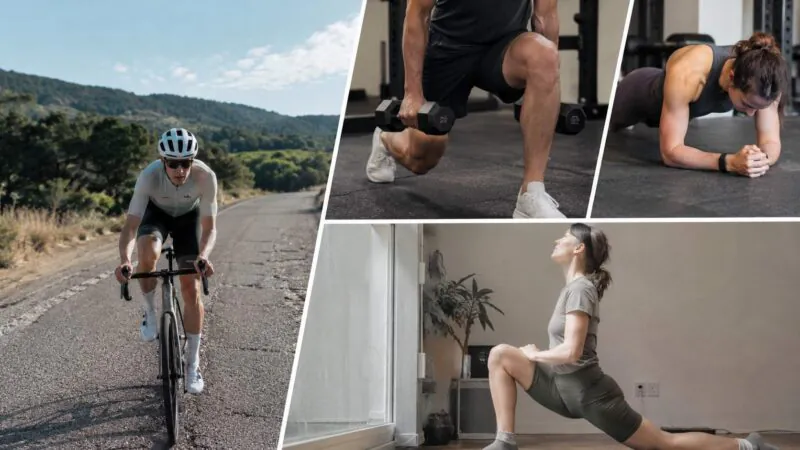
Cycling builds endurance, improves cardiovascular fitness, and strengthens the muscles used to pedal. However, spending hours on a bike doesn’t necessarily prepare the rest of your body for everything it needs to do.
Your legs repeat the same movement thousands of times during a ride. Your upper body remains in a relatively fixed position, and your bones receive much less impact than they would during running or other weight-bearing activities.
Adding strength training, core exercises, mobility work, and occasional walking or running can help address those gaps. You don’t need to spend more time exercising than cycling. Two short strength sessions and a few minutes of mobility work each week can make a meaningful difference.
Strength Training for More Powerful Legs
Leg strength is one of the most useful additions to cycling training, especially for riders interested in climbing, sprinting, or competing.
A scientific review of resistance training for cyclists found evidence that adding one or two weekly strength sessions can improve several aspects of cycling performance. Benefits include better pedaling efficiency and the ability to maintain power during demanding efforts.
The review also explained that appropriate strength training doesn’t necessarily cause unwanted weight gain. For cyclists concerned about climbing performance, gaining strength can be more valuable than simply trying to keep body weight as low as possible.
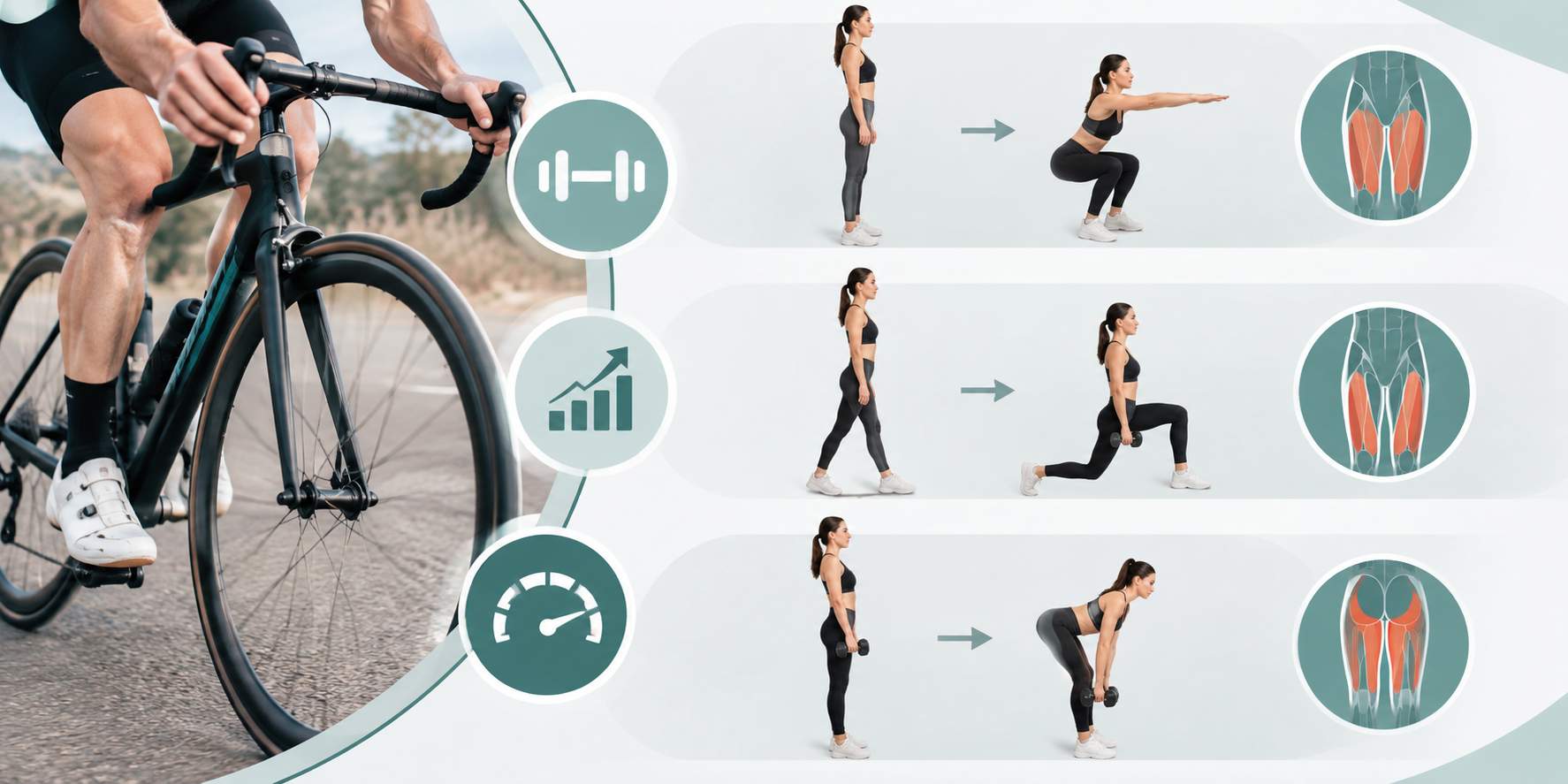
Squats
Squats strengthen the quadriceps and glutes, which contribute to force production during pedaling.
Beginners can start with bodyweight squats before progressing to dumbbells or a barbell. Keep your feet planted, lower your hips under control, and stand back up without allowing your knees to collapse inward.
Start with two sets of 8 to 12 repetitions. Increase resistance gradually as your technique improves.
Lunges and Split Squats
Cyclists push with one leg at a time, making single-leg strength exercises useful additions to gym training.
Reverse lunges, stationary split squats, and Bulgarian split squats strengthen the legs while challenging balance and hip control.
Try two sets of 8 repetitions per leg. If balancing is difficult, hold a stable surface until you feel comfortable performing the movement independently.
Romanian Deadlifts
Romanian deadlifts train the hamstrings and glutes through a hip-hinging movement. They provide resistance through a movement pattern that differs substantially from pedaling.
Hold dumbbells close to your legs, move your hips backward, and maintain a comfortable, neutral back position. Lower the weights only as far as you can without losing control.
Two sets of 8 to 10 repetitions are enough for a beginner to start learning the exercise.
Training tip. Avoid introducing heavy leg exercises the day before a demanding interval session or important race. Muscle soreness can affect your ability to produce power on the bike.
Core Exercises for Better Stability on the Bike
Your abdominal and back muscles help stabilize your upper body as your legs push against the pedals. Core strength becomes especially useful when riding out of the saddle, sprinting, or holding an aerodynamic position.
A cyclist with limited trunk endurance may start shifting position more frequently during a long ride. Core training can improve the ability to control these movements, although saddle discomfort and back pain can also have other causes.
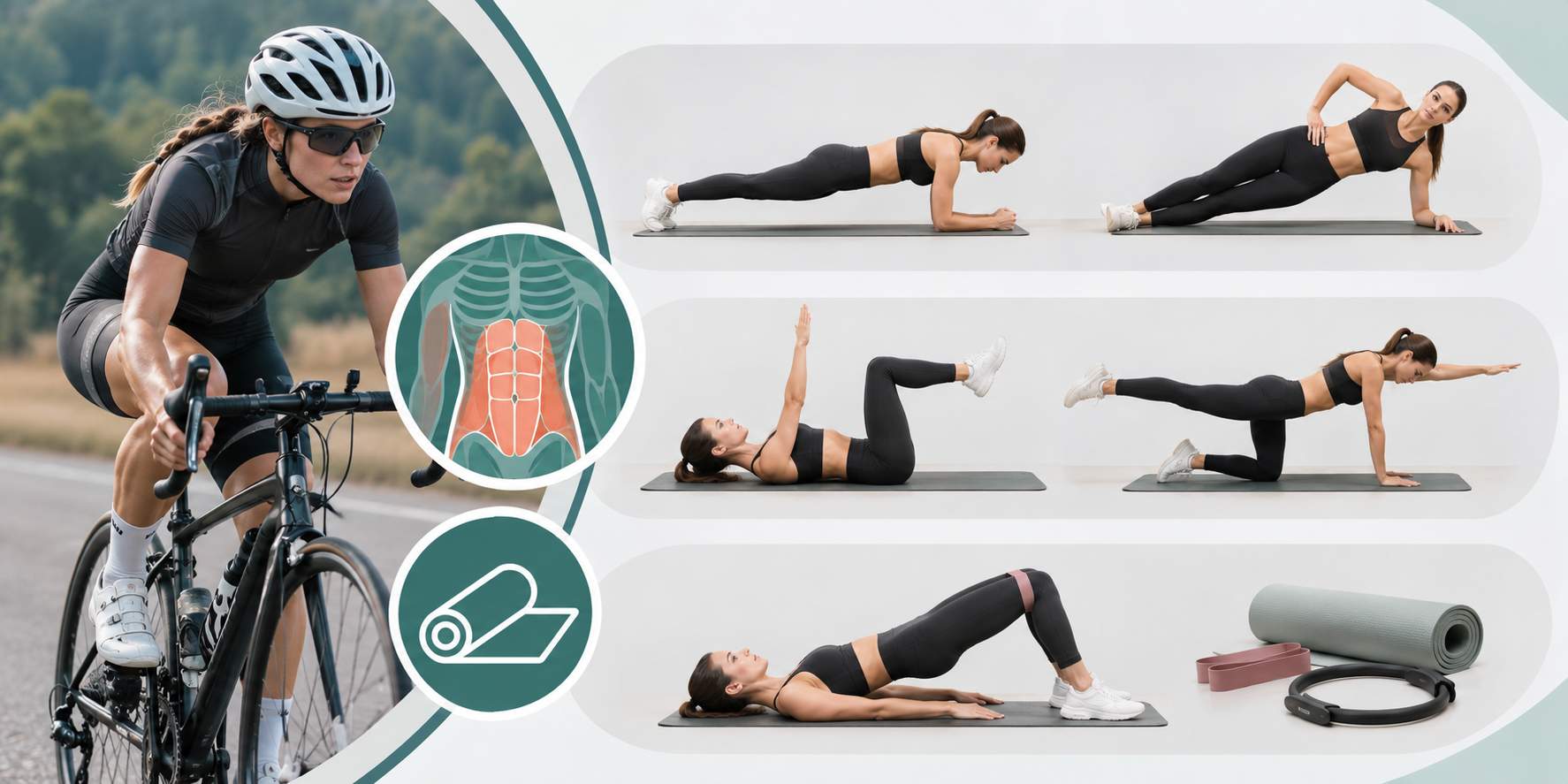
Planks and Side Planks
A standard plank trains the abdominal muscles to resist excessive movement of the lower back. Side planks place more emphasis on the muscles along the sides of the trunk.
Start with 20 to 30 seconds per hold. Keep breathing normally and stop when your hips begin to sag or your position becomes difficult to maintain.
Dead Bugs and Bird Dogs
Dead bugs involve extending opposite arms and legs while keeping the lower back controlled against the floor. Bird dogs train a similar skill from a hands-and-knees position.
Both exercises are useful for cyclists who need to improve trunk control without adding heavy resistance.
Try 8 to 10 slow repetitions on each side.
Pilates and Controlled Resistance Training
Pilates-style exercises provide another way to work on trunk stability, controlled movement, and muscular endurance. Sessions can involve floor exercises, resistance bands, or spring-based equipment.
For cyclists who enjoy controlled resistance workouts and want equipment suited to a shared home space, a quieter megaformer alternative is a great option to consider.
Exercises involving controlled lunges, supported planks, and hip movements can complement regular cycling. A machine isn’t essential, however. Many of the same muscle groups can be trained using a mat and resistance bands.
One or two short core sessions per week can fit alongside your existing strength workouts.
Mobility Exercises for the Hips, Back, and Ankles
Long rides keep the hips and knees moving through a relatively limited range. Riders also spend considerable time with their hips bent and their upper bodies leaning forward.
Mobility exercises help maintain comfortable movement outside those positions. They are especially useful for cyclists who spend much of the working day sitting at a desk.
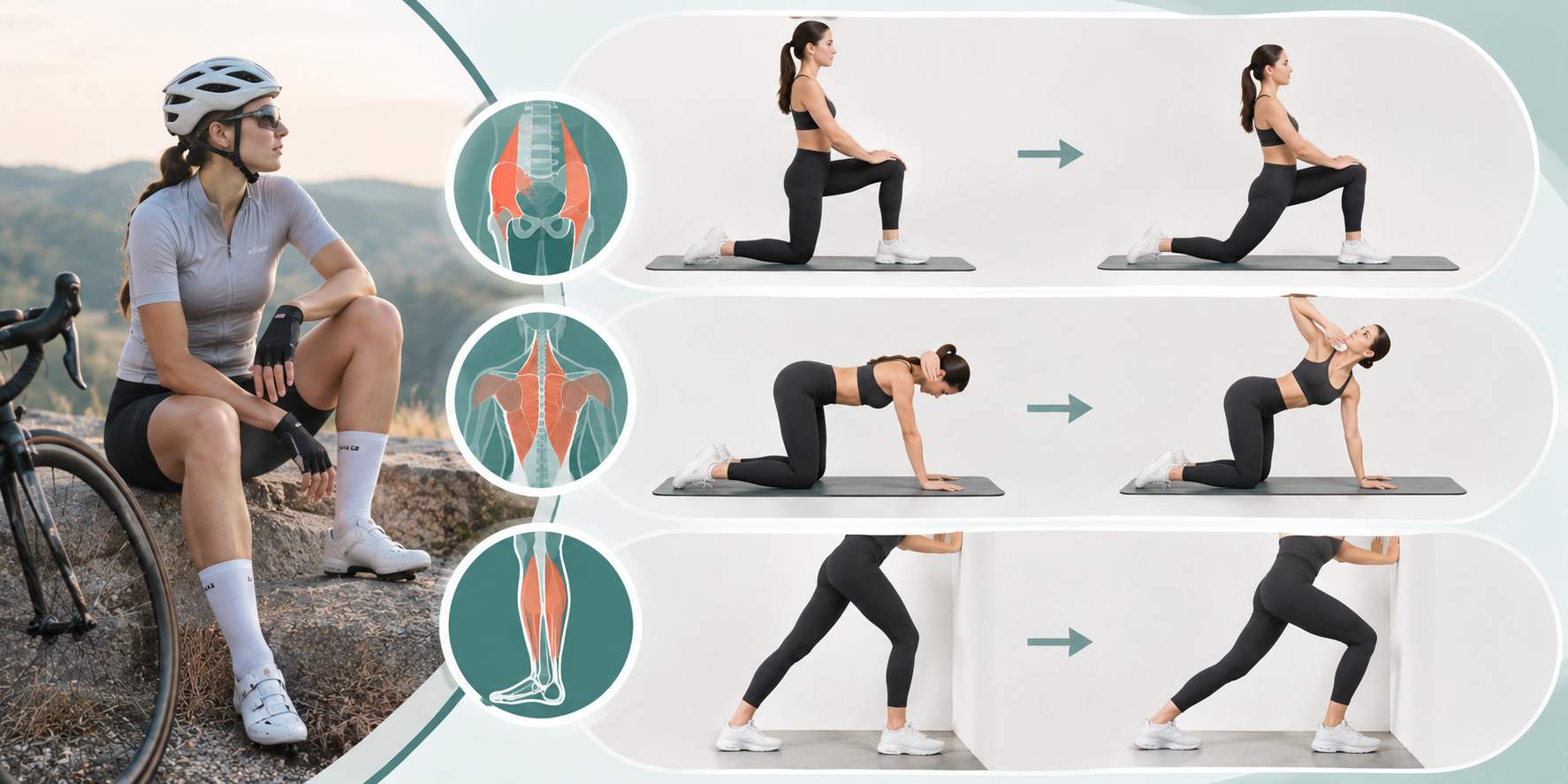
Hip Flexor Stretch
Kneel with one knee on the ground and the opposite foot in front. Gently move your pelvis forward until you feel a stretch near the front of the hip.
Hold for 20 to 30 seconds on each side. Avoid arching your lower back to force a deeper stretch.
Thoracic Spine Rotations
Upper-back mobility can become limited when most daily activities involve sitting or leaning forward.
Start on your hands and knees. Place one hand behind your head and slowly rotate your upper body toward the ceiling. Return to the starting position and repeat.
Perform 8 slow repetitions per side.
Calf and Ankle Mobility
Calf stretches and controlled ankle movements can help maintain ankle range of motion. A simple exercise involves standing facing a wall and moving one knee forward over the foot without lifting the heel.
Keep the motion comfortable and repeat 10 times on each side.
Remember. Stretching can improve flexibility, but it isn’t a guaranteed way to prevent cycling injuries. Persistent pain, numbness, or recurring discomfort deserves a separate assessment, including checking bike fit when appropriate.
Upper-Body Exercises for Shoulders, Arms, and Back
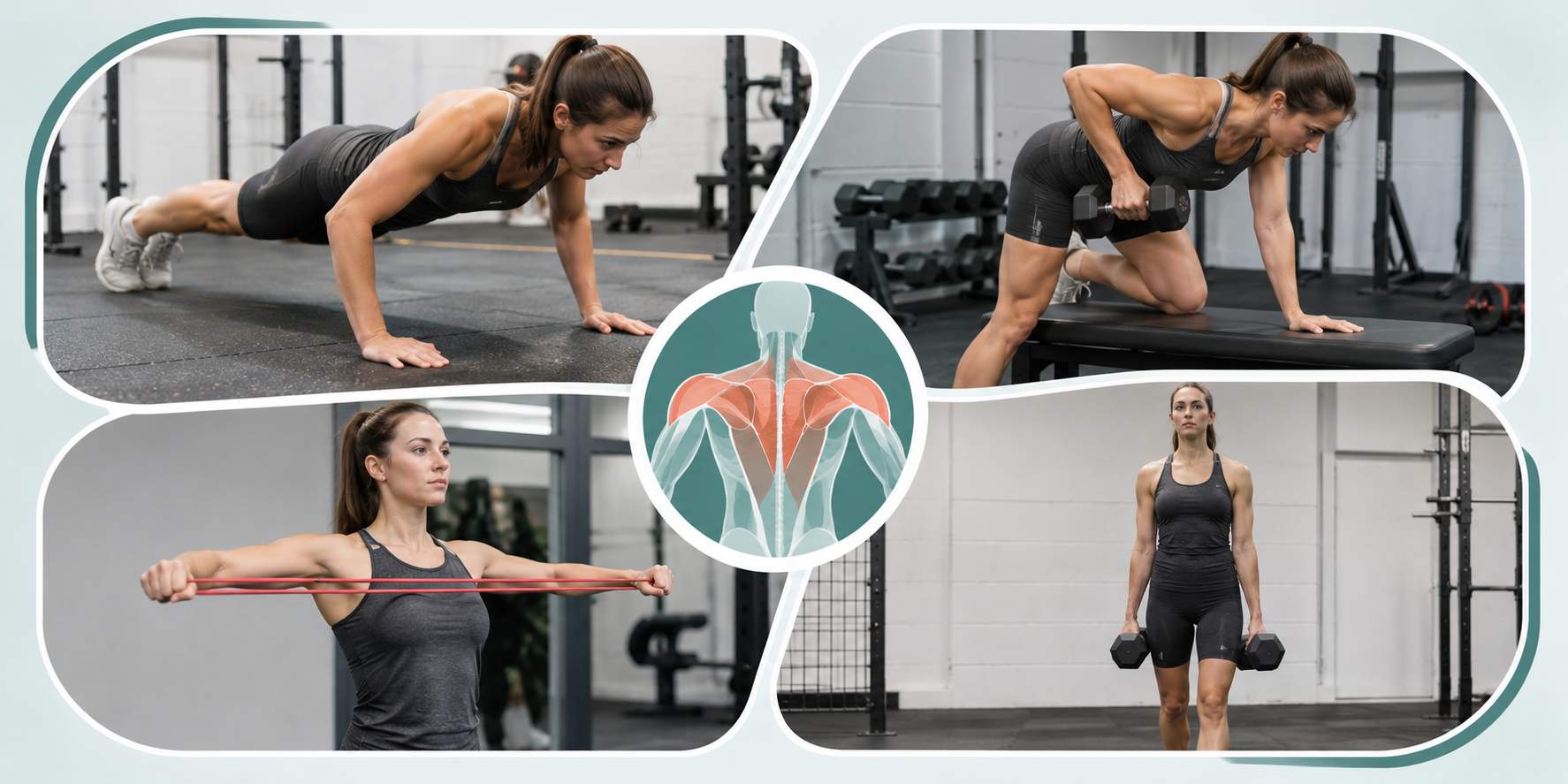
Road cyclists spend long periods supporting part of their upper-body weight through the handlebars. Mountain bikers also use their arms and shoulders to manage the bike over uneven ground.
Upper-body strength training develops muscles that cycling doesn’t challenge as directly. A balanced routine should include pulling and pushing exercises.
| Exercise | Main Muscles | Suggested Starting Volume |
| Push-ups | Chest, shoulders, triceps | 2 sets of 8 to 12 |
| Dumbbell rows | Upper back, lats, arms | 2 sets of 10 |
| Resistance band pull-aparts | Upper back, rear shoulders | 2 sets of 12 to 15 |
| Farmer carries | Grip, shoulders, trunk | 2 carries of 20 to 30 seconds |
The repetitions above are starting suggestions, not fixed targets. Choose resistance that allows controlled movements without needing to struggle through the final repetitions.
You can complete the exercises after your main leg workout rather than creating a separate gym day. Aim for balanced training across the upper body rather than focusing only on the muscles used to hold the handlebars.
Walking, Running, and Other Weight-Bearing Activities
Cycling provides cardiovascular exercise with relatively little impact on the skeleton. That makes it useful for people who prefer low-impact activities, but it also means the bones receive less impact-related loading than they do during running and jumping.
A 2026 evidence-based guideline on exercise and bone strength recommends adding suitable training for bone health when cycling is the main form of exercise.
Walking is an accessible place to start, particularly for people who currently do little weight-bearing activity. Brisk walks, stair climbing, and resistance training can add loading outside the usual cycling movements.
Running and jumping introduce greater impact. They may be appropriate for healthy cyclists who tolerate them, but they aren’t necessary for every rider. Anyone with a history of stress fractures, osteoporosis, or joint problems should choose exercises according to professional guidance.
For recreational cyclists, a 20 to 30-minute walk on a non-cycling day is an easy addition. More demanding weight-bearing exercises can be introduced progressively when appropriate.
Recovery Exercises and Lighter Training Days
Adding gym sessions to a cycling plan increases the total training load. More exercise won’t automatically produce better results if fatigue keeps accumulating.
Rest days, gentle walks, mobility sessions, and easy cycling can help manage the workload. A recovery ride should feel genuinely easy, with enough breathing control to hold a normal conversation.
If your legs remain sore after strength training, move the next demanding session rather than forcing yourself through intervals at a lower power output.
Sleep and adequate food intake also matter. Cyclists completing longer or more intense workouts need sufficient energy to support training and recovery. Our article on cycling nutrition and riding performance explains how food and hydration affect exercise and recovery.
Watch for unusually persistent fatigue, reduced performance over several sessions, poor sleep, or soreness that doesn’t improve. Those signs may indicate that your current training load needs adjusting.
Which Exercises Should Cyclists Prioritize First?
If your schedule is already crowded, start with strength training. Two weekly sessions covering the legs, trunk, and upper body provide a more balanced training stimulus than adding another easy ride simply to increase mileage.
Squats or split squats, a hip-hinge exercise, rows, push-ups, and planks form a useful starting routine. Add a few minutes of hip and upper-back mobility after riding, especially if those areas feel stiff.
Walking or another suitable weight-bearing activity can help address the lack of impact loading during cycling. Keep demanding workouts separated by enough recovery time to maintain the quality of your riding sessions.
For someone who cycles mainly for enjoyment and general fitness, a balanced routine can improve physical capacity without turning every day into a hard workout. Competitive cyclists can use the same exercises with resistance, volume, and scheduling adjusted to their racing demands.
The priority is to keep cycling as your main sport while training the muscles and movement patterns that riding alone doesn’t fully develop.