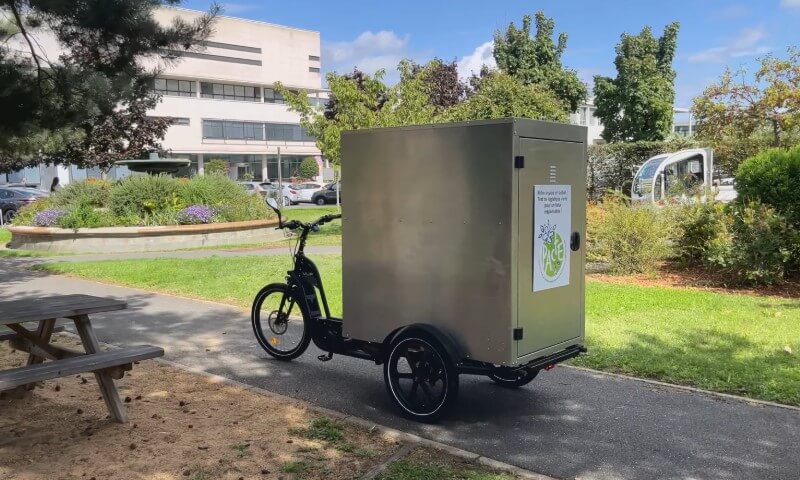
Medicine delivery has a cold-chain problem hiding inside an urban-mobility problem. Vaccines, samples, and temperature-sensitive drugs need stable handling, yet city centers are harder to serve with vans because of congestion, access rules, parking limits, noise restrictions, and low-emission policies.
VUF XXL Coldway Inside aims at that narrow, demanding space: short-range medical deliveries where temperature control matters as much as arrival time.
VUF XXL Coldway Inside looks less like a novelty cargo bike and more like a serious niche logistics tool. Its strongest case is pharmacy, clinic, lab, and municipal delivery work in dense streets where a refrigerated van feels oversized.
What Is The VUF XXL Coldway Inside?
VUF XXL Coldway Inside is a French-made electrically assisted refrigerated cargo trike developed by VUF Bikes and Sofrigam Group.
VUF describes it as a cold cargo bike designed for food, fresh, ambient, frozen, and pharmaceutical products such as vaccines and samples, with production linked to Mérignac, Perpignan, and Arras in France.
Its core idea is simple: combine a compact professional e-trike with a controlled-temperature box using Coldway technology. VUF lists a 0.5 m³ useful volume, 60 kg rear payload, and 25 kg front rack payload for the Coldway model.
The company also says the vehicle fits VAE requirements, allowing use on bus lanes and bike paths where local rules permit.
| Feature | Published Detail |
| Vehicle type | Electrically assisted refrigerated cargo trike |
| Main use | Temperature-sensitive urban delivery |
| Useful volume | 0.5 m³ |
| Rear payload | 60 kg |
| Front payload | 25 kg |
| Cold autonomy | 8 hours, with up to 12 hours under stated door-opening conditions |
| Temperature range | App-controlled from 0°C to 15°C |
| Certifications mentioned | ATP, PIEK, DIN 79010, Made in France |
Why Medicine Delivery Is A Tough Test
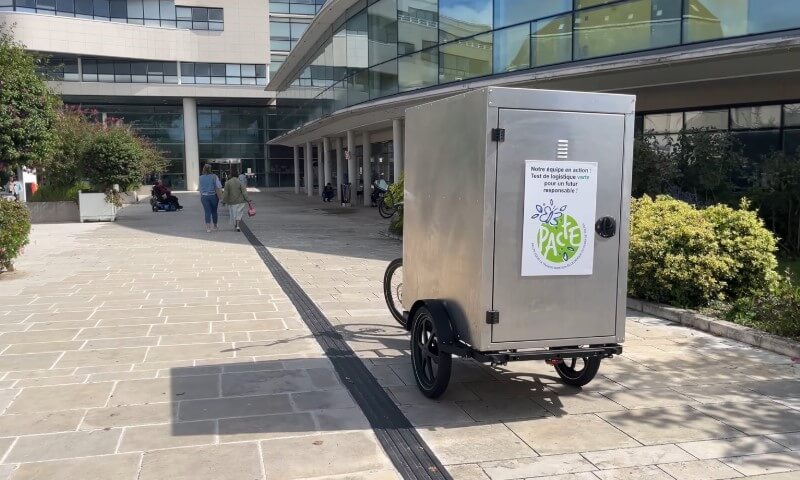
Medical delivery leaves less room for improvisation than ordinary parcel work. A missed handoff is annoying for a parcel. A temperature excursion can turn a vaccine shipment, blood sample, biologic, or diagnostic material into waste.
That is why many healthcare shippers still rely on dedicated pharmaceutical carriers for longer or more sensitive routes, especially when cargo needs monitored vehicles, trained drivers, and emergency response planning, such as https://www.divinetrans.com/page/transportation-of-pharmaceuticals-by-professional-company
CDC guidance says vaccines licensed for refrigerator storage should generally stay at 2°C to 8°C. CDC also warns that some liquid vaccines can permanently lose potency if frozen, which matters because cold-chain failure can mean either too warm or too cold.
European pharmaceutical distribution has a similar logic. EMA’s GMP and GDP guidance page explains that good distribution practice sits inside a wider compliance framework for human and veterinary medicines, with European Commission GDP guidance providing the underlying interpretation for distribution controls.
So a medicine-delivery vehicle needs more than insulation. It needs repeatable performance, trained handling, route planning, handoff discipline, temperature records, and clear accountability when something goes wrong.
Coldway System: The Main Technical Story
The most interesting part of VUF XXL Coldway Inside is the active cold box. VUF says the box is insulated with a food-grade polyester gel coat and generates cold through a chemical reaction involving ammonia, salts, and graphite.
The published VUF page lists an 8-hour autonomy, mobile-app temperature control from 0°C to 15°C, ATP certification for food transport, and PIEK certification for low-noise night delivery below 60 dB(A).
Sofrigam, the cold-chain partner behind Coldway Inside, describes Coldway as a patented active solution for autonomous, regulated cold-chain maintenance. Its broader active-container range covers temperature bands including +2°C to +8°C, +15°C to +25°C, and frozen ranges, depending on product configuration.
For medicine delivery, the 0°C to 15°C control range is useful, yet buyers should pay attention to validation. A box capable of holding 0°C to 15°C does not automatically mean every pharmaceutical route is qualified for every product.
Vaccines often sit in the 2°C to 8°C band, while some medicines require controlled room temperature, frozen, or ultra-cold handling. Route testing and product-specific standard operating procedures still matter.
How It Rides
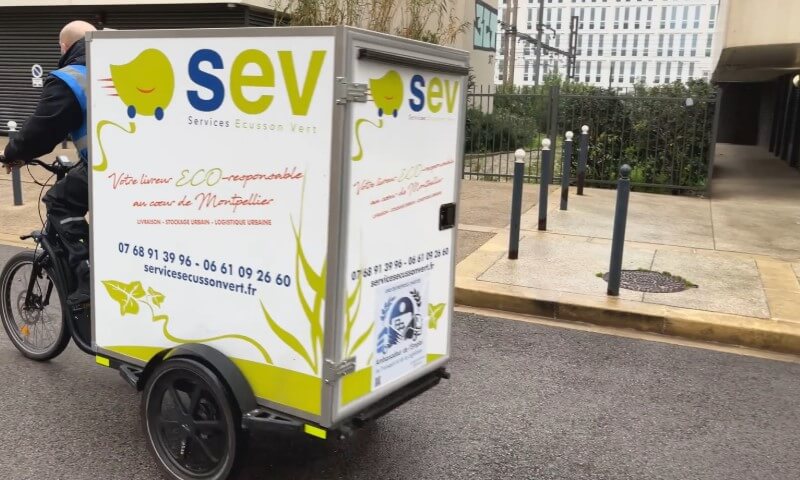
VUF builds the Coldway version on its XXL MAX professional e-trike platform. The base XXL MAX is described as a professional trike with a large carrying capacity, made in France, and DIN 79010 certification.
VUF lists a 1.10 m width, 200 kg rear base capacity for the broader XXL MAX platform, 250 W motor options, hill capability up to 18% under load, and a 180 cm turning radius.
For a delivery rider, three numbers stand out: width, payload, and turning circle. A 1.10 m width keeps the trike compact enough for many European-style bike lanes and older urban streets.
A 60 kg rear payload is modest compared with a van, but strong for high-value, low-volume medicine runs. A 180 cm turning radius helps in courtyards, clinic entrances, alley streets, and loading zones where vans often lose time.
ElectricDrives reported additional published details around launch, including a Valeo Cyclee motor, about 50 miles of battery autonomy, a 20 mph maximum speed, and an 8-hour Coldway box autonomy.
Where It Makes Sense
VUF XXL Coldway Inside makes the most sense in urban routes where medicine loads are small, delivery density is high, and access is awkward for vans.
Good fits include:
- Pharmacy-to-patient delivery in city centers
- Clinic-to-lab sample movement
- Hospital campus and satellite-site transfers
- Vaccine outreach programs inside dense districts
- Temperature-controlled deliveries during restricted traffic hours
- Municipal health or social-care meal and medicine routes
VUF says La Poste tested the model in Paris for meal delivery to elderly and isolated people, with more than 20 VUF Bikes x Sofrigam electric trikes used for senior home delivery.
That use case is not identical to medicine delivery, but it tells a lot. Meal delivery to vulnerable residents needs punctual routing, cold-chain discipline, door-to-door handling, and urban access. Medicine delivery adds stricter documentation, but the operational pattern is close.
Where It Falls Short
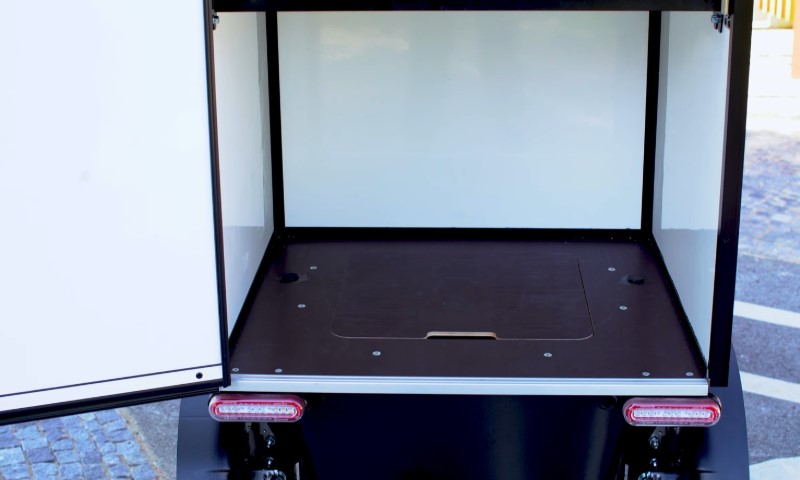
The biggest limitation is capacity. A 60 kg rear payload and 0.5 m³ box are enough for many medical routes, but not for bulk wholesale pharmacy replenishment or hospital network distribution across long distances. A van still wins when shipments are large, routes are suburban, or one driver must cover many distant stops.
Weather exposure and rider fatigue also deserve attention. A trike can beat a van in narrow central streets, but long shifts in rain, heat, wind, or winter traffic require proper rider equipment, maintenance planning, and realistic route lengths.
Another concern is temperature proof. VUF provides published cold-performance claims, but a medical operator would still need route validation with loaded boxes, real door openings, seasonal testing, backup plans, and logger data. For sensitive healthcare products, marketing specs are only the starting point.
Cold-Chain Compliance: What Operators Must Check
The trike’s ATP and PIEK credentials are valuable, especially for urban cold logistics and night work. VUF says its refrigerated trikes are PIEK and ATP certified for food and pharmaceutical delivery at night while avoiding urban access constraints.
Still, pharmaceutical compliance depends on the operator. A courier company or pharmacy network should confirm:
- Required product temperature band
- Validated route duration
- Door-opening assumptions
- Temperature logger placement
- Driver training
- Cleaning procedures
- Tamper control and chain of custody
- Deviation reporting
- Handoff recordkeeping
The key question is not “Can the box get cold?” The better question is: Can the route prove that each product stayed inside its allowed temperature range from pickup to handoff?
How It Compares With A Refrigerated Van
View this post on Instagram
A refrigerated van offers more volume, more weather protection for the driver, longer route reach, and familiar fleet management. VUF XXL Coldway Inside offers better access, lower noise, smaller footprint, easier stopping, and stronger fit for bike-lane or restricted-zone operations.
Urban freight research supports the broader shift. The University of Washington’s Urban Freight Lab notes that cargo e-bikes are smaller and easier to maneuver than vans, while a Seattle pilot showed operational differences around parking and walking time.
The same source cites New York City’s cargo bike pilot, where cargo e-bikes were linked to estimated CO2 savings of 7 tons per bike per year.
European urban policy work points in the same direction. The EU Urban Mobility Observatory notes that urban freight can account for up to 30% of road space and 25% of transport emissions in European cities, while cargo bikes and micro-hubs are being tested as zero-emission last-mile tools.
Final Verdict
VUF XXL Coldway Inside is a strong specialized vehicle, not a universal van replacement. Its best role is controlled-temperature delivery over dense urban routes where payloads are compact, time windows are tight, and vehicle access is a daily headache.
For medicine delivery, the appeal is clear: quiet operation, 8-hour active cold autonomy, app-based temperature control, compact dimensions, and a payload profile suited to pharmacy and clinic work.
The caution is just as clear. Any healthcare operator needs route validation, temperature logging, documented procedures, and product-specific compliance checks before putting sensitive medicines on board.
For the right city route, VUF XXL Coldway Inside looks like a smart, credible cold-chain tool. For broad regional logistics, a refrigerated van still does the heavy lifting.