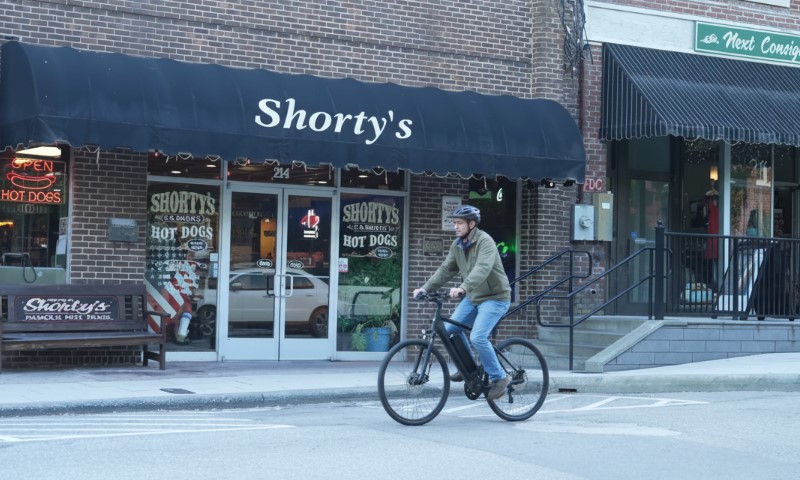
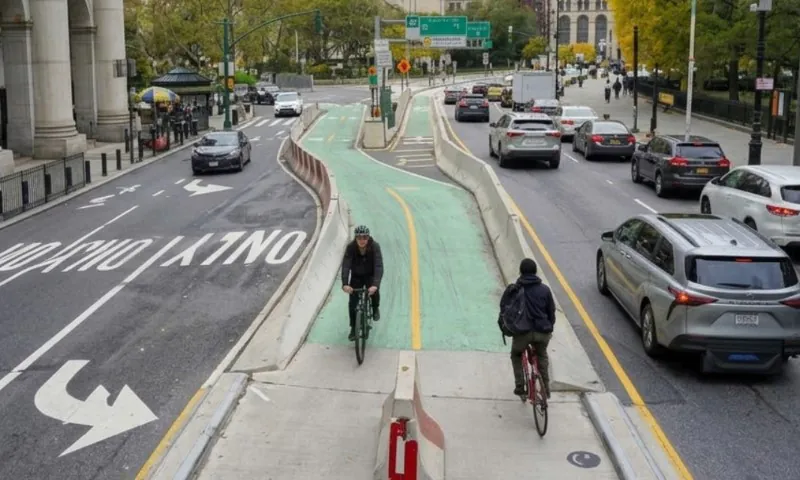
Bike access on US roads depends on road type, state law, and posted signs.
Most regular roads allow bicycles, including local streets, city roads, many state highways, and many U.S. routes.
Restrictions are more common on interstates, expressways, freeways, ramps, tunnels, and certain bridges. One common source of confusion is the word “highway.”
It can mean a regular public road, a controlled-access highway, or an interstate.
Bike access depends on the actual road type, not the label alone.
Where Bicycles Are Usually Allowed
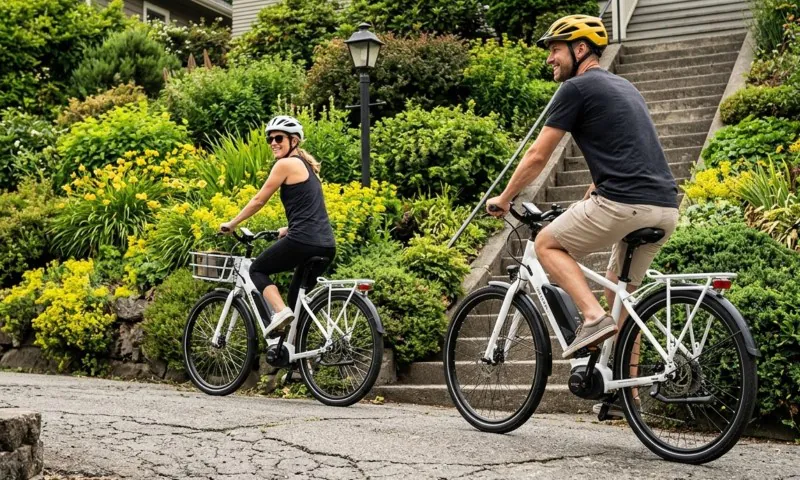
Local streets and city roads are generally open to bicycles. Many regular state highways and U.S. routes are also open unless signs ban bikes.
Conventional state highways and U.S. routes are almost always open to bicycles, except for certain bridges, tunnels, or urban freeway segments posted “No Bicycles.”
New York gives bicyclists the legal right to share the road on most public highways.
North Carolina treats bicycles as vehicles, so cyclists must follow vehicle traffic laws and may use many roads open to traffic unless restricted.
Common places where bicycles are usually allowed include:
- Neighborhood streets.
- City roads.
- Rural roads.
- Conventional U.S. routes.
- Regular state highways.
- Road shoulders when safe, legal, and usable.
Shoulders may help riders avoid fast traffic, but they are not always safe or required.
Gravel, glass, rumble strips, parked vehicles, and rough pavement can make the shoulder unsafe.
Where Bicycles Are Often Restricted
Interstates, expressways, and freeways are often restricted because of high speeds, ramps, controlled access, and limited escape space.
Limited-access highways are usually controlled by state DOT policy. Access is often shown by signs at ramps or entry points. A “No Bicycles” sign means riders may not enter.
Interstates are the most restricted category. Many Western states allow cyclists on interstate shoulders where no reasonable alternate route exists.
Most states east of the Mississippi River prohibit bicycles on interstates.
New York prohibits bicycles on interstate highways and expressways. Authorities may also ban bikes on other controlled-access highways.
North Carolina prohibits bicycles on interstate highways such as I-26, I-40, I-77, I-85, I-95, and I-540.
Conventional routes such as US-1, US-17, US-64, and NC-12 are different and generally stay open to bicycles.
Restricted areas often include:
- Interstate highways.
- Expressways and freeways.
- Highway ramps.
- Certain bridges.
- Certain tunnels.
- Urban freeway segments marked “No Bicycles.”
Basic Road Rules for Cyclists
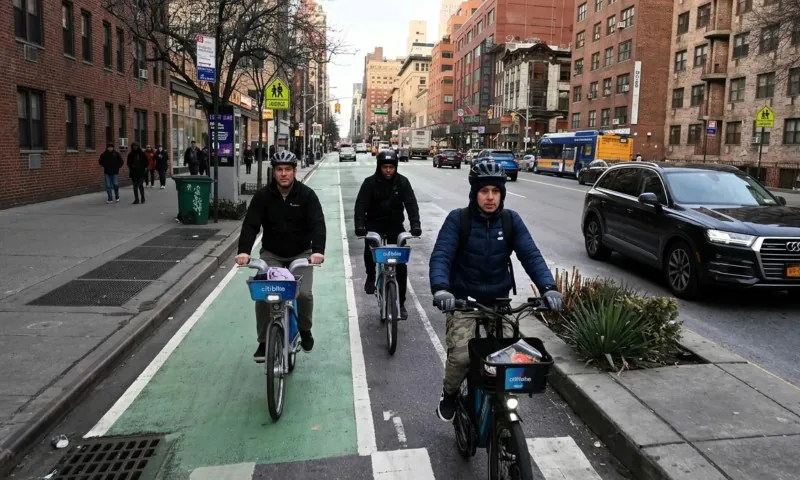
Cyclists should ride in the same direction as traffic. Riding against traffic increases crash risk because drivers do not expect bicycles to approach that way.
Seeking compensation after a commercial truck accident in Shelby can be especially important because crashes on North Carolina roads shared with larger vehicles are often severe, as trucks need more stopping distance and have wider blind spots.
Cyclists must obey traffic lights, stop signs, lane markings, and pavement markings.
In New York, bicyclists can receive traffic tickets for violations.
Bike lanes should be used when required and safe.
Riders may leave a bike lane to avoid hazards, pass another cyclist, prepare for a turn, or move away from opening car doors.
Cyclists should stay to the right when practical. That does not mean riding on the edge at all costs.
Riders may move left to avoid debris, parked cars, poor pavement, or other hazards.
Helpful road habits include:
- Hold a steady line.
- Signal turns and stops.
- Make eye contact with drivers when possible.
- Avoid sudden swerves.
- Ride far enough away from parked cars.
Riding on Shoulders
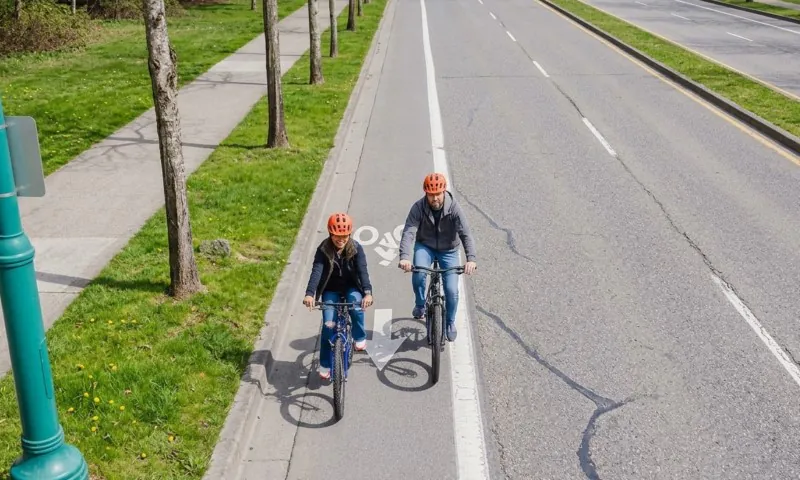
Shoulders can be used when allowed and safe. A paved shoulder may give cyclists more room on roads with fast traffic.
In New York, if no usable bike lane exists, cyclists may ride on the right shoulder or near the right edge or curb of the roadway.
Cyclists may leave the shoulder to avoid hazards such as:
- Rumble strips.
- Parked vehicles.
- Broken pavement.
- Drain grates.
- Gravel or loose sand.
Cyclists may also move farther left to avoid hazards or prepare for a left turn, as long as they do not unduly interfere with traffic.
On some interstates or rural highways, bicycle access may be allowed only on the paved shoulder, not in the travel lanes.
Riders should check signs and state rules before using any high-speed road.
State Law Differences
Bicycle rules vary by state. Some states allow bikes on certain highways or interstate shoulders.
Others ban them completely on interstates or expressways.
Federal rules do not directly allow or ban interstate cycling. State DOTs generally make the access decision.
Posted signs matter, but lack of a “No Bicycles” sign does not always mean bicycles are allowed. Some restrictions come directly from state policy.
E-bike rules may also differ. A policy that mentions bicycles may not automatically include motor-assisted bikes.
Cyclists should check state DOT rules, posted signs, and local restrictions before riding on high-speed roads.
Safety and Equipment Basics
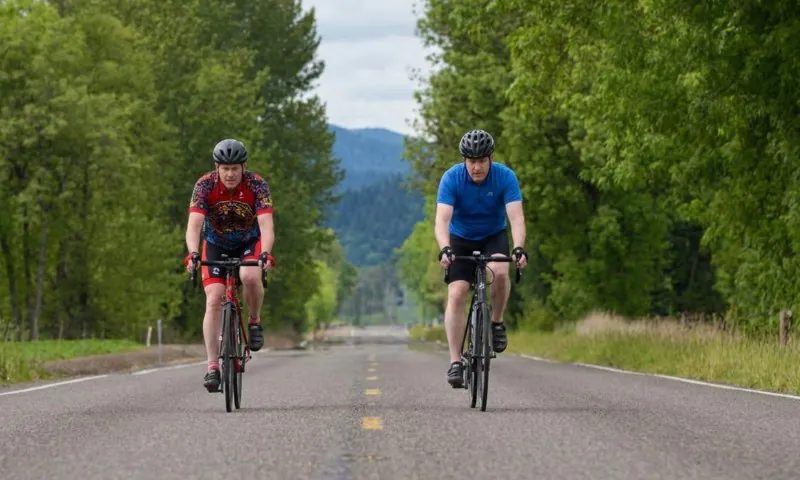
Cyclists should use lights and reflectors at night or in low visibility.
North Carolina requires bicycle lights from sunset to sunrise, or anytime the bike is not visible from at least 300 feet.
New York requires a white front headlight visible from at least 500 feet and a red or amber rear light visible from at least 300 feet when riding between a half-hour after sunset and a half-hour before sunrise.
Helmet laws also vary. North Carolina requires helmets for riders under 16. New York requires approved helmets for bicyclists and passengers age 14 and under.
Children ages 1 to 4 must ride in a child safety seat in New York, and children under 1 may not be transported by bicycle.
Brakes must work properly. New York requires a brake capable of making the tires skid on dry, level pavement.
New York also requires a bell, horn, or other audible device heard from at least 100 feet away. Sirens and whistles are not allowed.
Important safety basics include:
- Use lights in low visibility.
- Check brakes before riding.
- Keep reflectors visible.
- Wear a helmet.
- Ride predictably.
- Avoid high-volume headphones.
Drivers passing cyclists in North Carolina must give at least 4 feet of clearance.
Summary
Bikes are generally allowed on ordinary streets and many regular public highways.
Restrictions are more common on interstates, expressways, freeways, ramps, bridges, and tunnels.
Cyclists should check signs, follow state law, use bike lanes or shoulders when safe, and choose lower-speed routes when possible.