
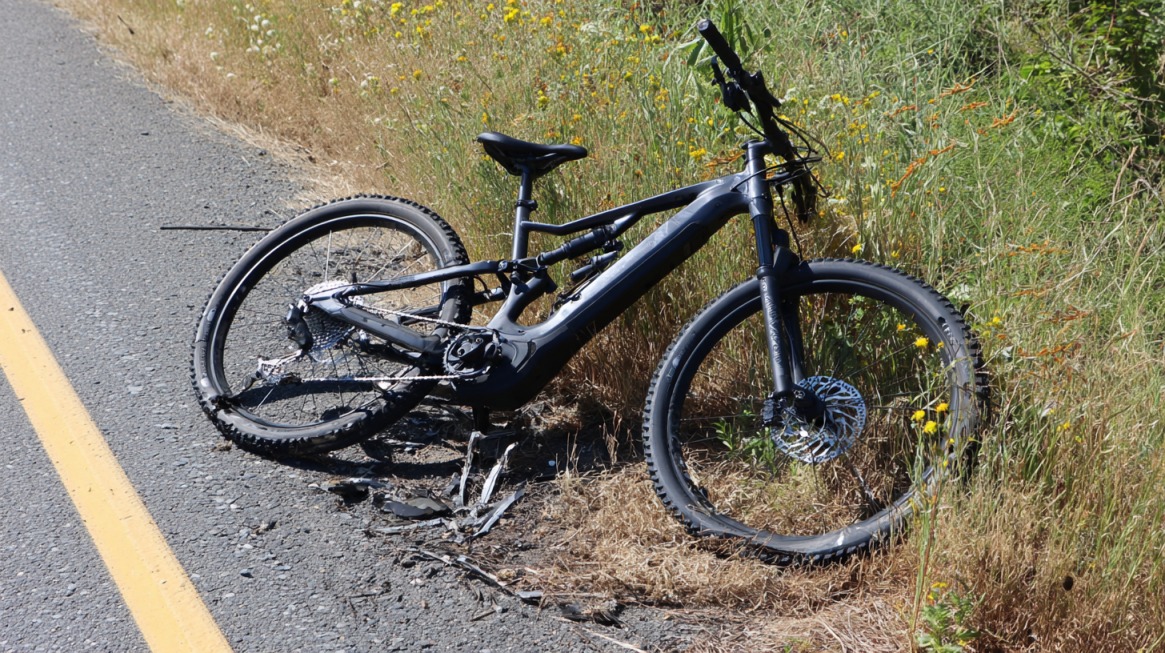
A fall on an e-bike always feels louder than it looks. One moment, everything is rolling fine, then the rear of the bike smacks the ground, and you hear a sound that does not belong anywhere near a drivetrain.
After the dust settles, the derailleur starts acting like it has its own ideas. Some gears feel perfect, others resemble a haunted typewriter. That pattern is classic for one culprit, a derailleur hanger that took the hit for the frame.
The goal here is simple. Set up a clear, workshop-style process you can follow at home on an e-bike after a fall.
The whole fix is more about patience than strength. A bent hanger can be corrected. A bent derailleur body can sometimes be saved, but often needs replacement.
An e-bike puts extra torque through every shift, so a sloppy repair will show up far faster than you think. Let’s get the whole picture sorted piece by piece.
The First Rule After a Fall – Do Not Pedal to See What Happens
The most common mistake riders make is pedaling right after the crash. Curiosity is strong. You want to check if the chain still grabs. But a bent hanger can let the derailleur move toward the spokes.
One hard pedal stroke can drag the derailleur into the wheel. That can lock the wheel and convert a small repair into a very expensive day.
- Stop riding and power the e-bike off
- Lift the rear wheel and spin it slowly by hand
- Look closely at the derailleur cage as the wheel turns
- If the cage or chain grazes the spokes even once, stop riding entirely
If you see contact with spokes, do not limp home pedaling. Either walk the bike or perform a minimal roadside fix to keep it from destroying itself.
If you write your own maintenance notes, a quick pass through a chatgpt detector can help you spot unclear or overly technical phrasing before you forget what you meant.
What Usually Bends in a Crash

Many riders say they have “a bent derailleur,” but the derailleur body itself is rarely the part that gives way first.
Manufacturers design the hanger as a sacrificial piece. It is thin, replaceable, frame-specific, and meant to deform under impact so the derailleur and frame do not.
You are really sorting between four possible issues.
| # | Issue | Description / Signs |
|---|---|---|
| 1 | Bent Hanger |
|
| 2 | Bent Derailleur Body or Cage |
|
| 3 | Wheel or Axle Seating Problems |
|
| 4 | New Hanger Still Out of Alignment |
|
Tools and Parts You Should Have
- 4, 5, and 6 mm hex keys
- Good light
- Degreaser and a rag
- A bike stand is helpful but not essential
Strong recommendations for a clean and accurate repair:
- A derailleur hanger alignment tool
- A torque wrench
Useful spare parts:
- A frame-specific replacement hanger
- A quick link
- A small section of spare chain in case you find a kinked link
A hanger gauge is a game-changer. Eyeballing alignment is not realistic, especially with 11 and 12-speed drivetrains. Small deviations cause big shifting problems.
Step 1: A Five-Minute Inspection That Sets the Tone

Start by powering off the e-bike. If the chain will sit on the smallest cog without grinding, shift it there gently or place it there by hand while turning the cranks slowly.
- The cassette cogs
- The chain line
- The upper pulley
Anything that looks offset toward the spokes or toward the dropout is a clue.
Now inspect the derailleur cage:
- Spin the pulleys to see if they rotate freely
- Look for cracked or chipped teeth
- Check whether the cage plates look straight
Then confirm the wheel is fully seated:
- Loosen and retighten the thru axle
- Make sure the wheel is pulled all the way into the dropouts
If the wheel shifts slightly when you reset the axle, that alone can fix half your symptoms.
Step 2: Confirm Whether Your E-Bike Actually Has a Hanger

Most e-bikes with conventional derailleurs do. The exception is SRAM Transmission. That system mounts the derailleur directly to an axle interface.
It does not use a hanger at all. If you have Transmission, the “bent hanger” path does not apply. You troubleshoot the derailleur itself.
- If the derailleur bolts to a small, replaceable, frame-specific piece, that is a hanger
- If the derailleur interface is large and sits around the axle with no small replaceable part, that is likely a hangerless system
Step 3: Address the Hanger First
A bent hanger is the number one source of shifting trouble after a fall. Every other adjustment depends on this part being aligned.
Service guides emphasize that no amount of cable tension tweaking or limit screw refinement will fix misalignment.
Replace or Straighten, the Practical Rule
- Replace it if it shows cracks
- Replace it if it needs more than gentle correction
- Replace it if it has already been bent before
Aluminum hangers harden each time they are bent. After a couple of corrections, they become brittle. Saving a few minutes by bending it again usually ends in a failure that throws the derailleur into the wheel.
What the Hanger Tool Measures
A hanger alignment gauge checks how perpendicular the hanger is relative to the rear axle. It measures distance from the tool’s pointer to the rim at several points around the wheel. If the measurements match, the hanger is straight.
Most guides consider around 4 mm of variation acceptable for everyday drivetrains. High-end systems appreciate tighter alignment.
A Repeatable Alignment Procedure
- Remove the derailleur from the hanger. Let it hang gently without twisting the cable.
- Thread the hanger tool into the hanger by hand.
- Set a reference point at the 6 o’clock position on the rim.
- Measure at 6, rotate to 12, then to 9.
- Use the tool as a lever to correct small deviations.
- Re check after each correction.
- Stop immediately if you see whitening or sudden resistance. That hanger is done.
If You Do Not Have a Hanger Tool
The best bet is a shop alignment.
- Install a new hanger if you have one
- Do not try to bend the old hanger by hand in large swings
- Avoid trusting the naked eye to evaluate alignment
Step 4: Confirm the Derailleur Is Still Square
Even if the hanger is perfect, a bent derailleur body can ruin every shift.
- The upper pulley does not sit under each cog cleanly as you shift
- The cage swings side to side instead of moving in a straight track
- Pulleys feel gritty or bind during each rotation
Trying to bend a derailleur back often creates a weak spot. Replacement is usually the cleanest solution.
Step 5: Reset the Derailleur Adjustments
Only start tuning once the hanger alignment is confirmed and the derailleur is verified straight.
The order below keeps the process simple.
High Limit Screw
Set the guide pulley so it lines up with the outer face of the smallest cog. A quick check:
Manually move the derailleur inward toward the middle of the cassette, let it go, and watch it return to the smallest cog. If it hops up to the second cog without you shifting, the high limit needs adjustment.
Low Limit Screw
Here, the goal is safety. You want the derailleur to reach the biggest cog cleanly, but never push the chain into the spokes.
Line the guide pulley with the center of the biggest cog, then fine-tune under light crank rotation until the chain sits quietly with no chatter.
B Screw or B Tension Adjustment
B tension controls how close the upper pulley is to the cassette. Too close and shifts feel loud or slow under load. Too far and shifts feel vague.
Some systems, especially SRAM AXS, rely heavily on the B gap. Check your drivetrain’s specification. Many come with a small plastic setup gauge.
Cable Tension and Indexing
- Shift one click at a time
- Listen for hesitation
- Add or release cable tension in tiny increments
Two millimeters of cable movement can change the feel dramatically. Make very small moves.
E-Bike Specific Realities That Influence Shifting After a Crash
E-bikes introduce extra torque into the drivetrain. That torque magnifies any small alignment error. Even a hanger that is slightly off can cause skipping under load.
High Torque Means Wear Shows Up Faster
Many e-bike-specific drivetrains, such as LINKGLIDE, exist because e-bike torque wears cassette teeth faster. After a crash repair, any misalignment can speed that process up.
Shift Load Management Helps More Than You Think
If your system has integrated shift support, the motor briefly reduces assistance during a gear change. That reduces strain on the chain and cassette.
- Ease off pedal pressure during shifts
- Avoid shifting while the motor is pushing hard
- Treat the first couple of post-repair rides as a test phase
Roadside Triage
- Power off the bike
- Do not pedal
- Pick one middle gear and ride in that single gear if the derailleur will stay there
- Adjust limit screws so the derailleur cannot wander into the spokes or off the smallest cog
- If you cannot stabilize it, walking the bike is cheaper than forcing it
Final Test Protocol at Home
- Spin the rear wheel and confirm no part of the derailleur touches spokes
- Shift across the cassette slowly
- Confirm each shift completes without hesitation
- Apply a light to moderate load during a test ride
- If skipping appears only under load, re-check hanger alignment and B tension first
A clean repair produces quiet engagement, predictable shifts, and no hint of the derailleur reaching too far inward or outward.

When It Is Time for a Professional
- The hanger cracks or snaps during correction
- The derailleur body shows visible distortion
- The chain has damaged links from being pulled into spokes
- You have a high-end 12-speed drivetrain, but no way to verify alignment with a hanger gauge
Shops have proper alignment tools, torque specs, and spare parts on hand. In some cases, a mechanic can save a derailleur that you wrote off. In others, they can spot frame alignment issues you cannot see at home.
Summary
A fall always feels like an interruption. Your chain pops, your shifting spirals, and the bike starts telling you stories you do not want to hear. Repairing a bent derailleur hanger brings everything back to center. When the hanger is straight, the derailleur knows where to go again.
When the axle sits cleanly in the dropouts, the whole drivetrain starts acting familiar. And when you give the e-bike a little space for the first few rides after the fix, it settles in without surprises.
Take your time, work in small moves, and your e-bike will roll out of the garage, shifting cleanly once again.