
Headphones on a bike feel ordinary now. Music during a long solo ride. A podcast on a commute. Turn-by-turn directions cutting through downtown traffic. What feels routine to riders has caught the attention of lawmakers, and the result is a patchwork of rules that can surprise even experienced cyclists.
Some states focus on whether both ears are covered. Others allow only one earphone. A smaller group goes further and bans listening devices for bicyclists on highways unless a narrow exception applies. Enforcement also shifts by location and circumstance.
A quiet neighborhood ride may draw no attention. A crash, complaint, or busy corridor often brings scrutiny.
We prepared a state-focused guide to headphone rules that actually apply to people riding bicycles. The numbers, language, and categories below match the statutes and public guidance riders encounter on real roads.
Why States Regulate Headphones For Cyclists
Legislatures usually frame headphone restrictions around hearing and situational awareness. The concern is not playlists or genres. The concern is whether a rider can detect external cues.
- Hearing horns and approaching vehicles
- Detecting sirens from emergency responders
- Responding to shouted warnings or calls from other riders
- Noticing mechanical issues like chain noise or brake rub
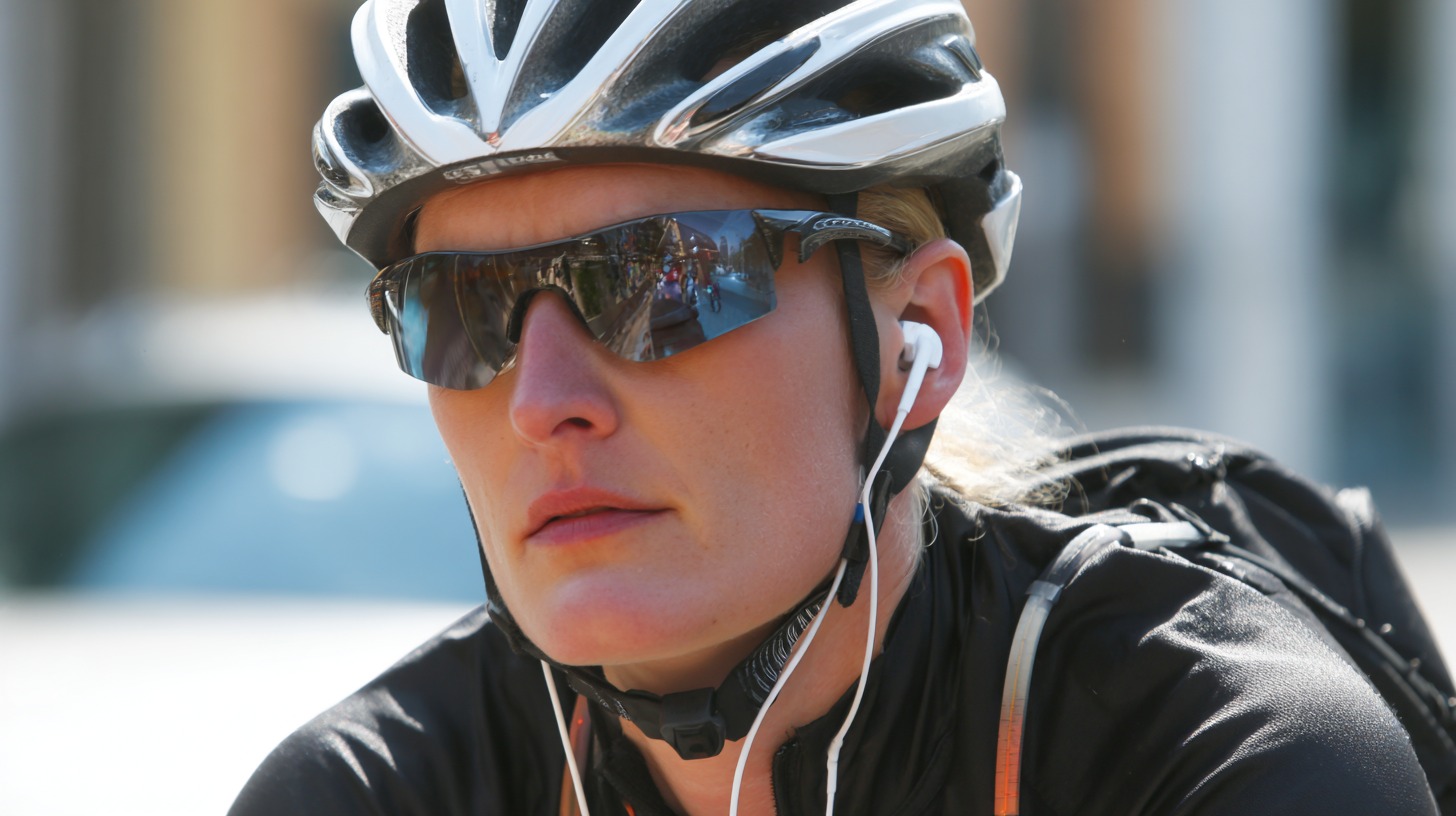
Volume often does not matter in the statute. Coverage does. Device type does. Context does. A law might never mention music, yet still prohibit a setup that occupies both ears while operating a bicycle on a public roadway.
The Question That Changes Everything: Does The Law Apply To Bicycles
Many headset laws were written with drivers in mind. Riders sometimes assume that silence equals permission. That assumption can fail in two common ways.
First, some statutes apply to anyone operating a “vehicle,” not only a motor vehicle. In many traffic codes, a bicycle is defined as a vehicle. Once that definition is in place, the same headset rule can cover both drivers and cyclists.
Second, even when a statewide statute is silent, local rules can step in. Cities and park authorities often regulate bicycle operation on streets, trails, and greenways.
Florida and Pennsylvania show how the vehicle definition matters. Florida law defines a bicycle as a vehicle in the traffic code, and the listening device rule applies to a person operating a vehicle while wearing a device in or over both ears.
Pennsylvania treats pedalcycles as vehicles with the rights and responsibilities of drivers, and the vehicle code includes a headphone prohibition with a one-ear cellular headset exception.
The Three Statutory Buckets That Cover Most States

Across the country, statewide rules that clearly apply to bicyclists tend to fall into three categories.
Both Ears Bans
The law targets headsets, headphones, earbuds, or earplugs that cover or occupy both ears. One ear is usually permitted. Some statutes add communication-focused exceptions.
More Than One Earphone Bans
The statute allows a single earphone and bans two. The language often reads “more than one earphone attached to an audio device.”
Highway Prohibitions With Exceptions
The law bans listening devices for bicyclists operating on highways, then lists narrow exceptions such as hearing aids or specific communication systems.
Knowing which bucket applies matters more than brand names or audio features.
States Where Statewide Law Clearly Regulates Headphones For Bicyclists
The table below lists jurisdictions where statewide law clearly applies to people riding bicycles on public highways or roadways. Penalties can vary by court or local schedule, but the rule itself is consistent statewide.
| State or Jurisdiction | Rule For Bicyclists | One Ear Allowed | What The Statute Focuses On | Penalties Noted |
| California | Prohibits headsets or earplugs that cover both ears while operating a motor vehicle or bicycle, with listed exceptions | Yes | Both ears covered | Treated as an infraction under the vehicle code |
| Delaware | Prohibits operating a bicycle while wearing a headset covering both ears | Yes | Both ears covered | Delaware traffic penalties apply |
| Florida | Prohibits operating a vehicle while wearing a listening device in or over both ears, with exceptions. Bicycle is defined as a vehicle | Often yes under exceptions | Both ears covered plus device-based exceptions | Noncriminal traffic infraction |
| Maryland | Prohibits operating a bicycle on a highway or roadway while wearing a headset covering both ears or earplugs in both ears | Yes | Both ears covered, earplugs included | Enforced under the Maryland traffic citation system |
| New York | Prohibits operating a bicycle on a public highway while wearing more than one earphone | Yes | More than one earphone | Vehicle and Traffic Law violation |
| Pennsylvania | Prohibits operating a vehicle while using headphones or earphones, with a one ear cellular headset exception. Pedalcycles treated as vehicles | Yes under exception | Broad ban with specific one-ear exception | Citation depends on enforcement |
| Rhode Island | Prohibits operating a bicycle on any highway while wearing listening devices, with listed exceptions | Sometimes | Broad prohibition with exceptions | $85 first, $95 second, $140 third and subsequent |
| Virginia | Prohibits operating a bicycle while wearing earphones in both ears | Yes | Both ears covered | Enforced under Virginia traffic rules |
@civilizedbibs Should you wear headphones while cycling? #biketips #cyclingtips #bicycletips #beginnercyclist #bikeride #roadcycling #recreationalcyclist #cyclinglife #casualcycling #mtb #cycling #bikefitness ♬ original sound – Civilized Bibs LLC
Notes That Matter On Real Roads
The word “highway” often means more than interstates. In many states, a highway is any public way maintained for vehicular travel. Residential streets usually count.
Earplugs are not always excluded. Maryland explicitly includes earplugs in both ears for bicyclists.
Exceptions are written narrowly. Pennsylvania’s one-ear carveout is tied to a cellular phone headset that provides sound through one ear and allows surrounding sound in the other. Florida includes similarly specific language for communication and dispatch devices.
Washington, DC, Deserves Special Attention
Washington, DC, is not a state, yet it sits between Maryland and Virginia and sees heavy cross-border riding. DC bicycle rules prohibit headsets, headphones, or earplugs that cover both ears while riding. Public guidance summarizes a $50 fine.
A rider who crosses into DC with two earbuds in can face a ticket even if the setup felt routine a few blocks earlier.
States That Regulate Drivers Only And Why Cyclists Still Get Cited

Some states restrict headphones for motor vehicle drivers only. Riders often read that and assume free rein. That assumption breaks down for two reasons.
The statute may use “vehicle” rather than “motor vehicle.” That single word can pull bicycles into the rule.
Local ordinances can fill the gap. Municipal codes often regulate bicycle equipment and operation on city streets, trails, and park paths.
Statewide silence does not guarantee legality everywhere in the state.
How Headphone Tickets Usually Happen
Headphone citations for cyclists tend to appear in predictable scenarios.
| Situation | Description |
|---|---|
| After A Crash | Following a collision, officers look for factors tied to attentiveness. A two-ear setup in both ears state is an easy citation. |
| Complaint-Driven Enforcement | Pedestrian complaints on shared corridors or repeated close calls at the same intersection can lead to targeted enforcement. |
| Group Ride Attention | Large group rides draw eyes. One rider rolling through a stop sign with earbuds can trigger a stop and an equipment citation. |
| Secondary Citations | A stop for running a red light or riding without lights at night can lead to a headphone ticket added on. |
Civil Liability And Why Legality Matters After A Crash
Even where no bicycle-specific headphone statute exists, audio use can surface in civil claims.
Riders injured in traffic collisions often learn how quickly headphone use becomes part of a legal dispute, which is why speaking with a bike injury lawyer in Indianapolis can help clarify liability early.
- Ability to hear warnings
- Ability to respond to sirens or horns
- Whether reduced awareness contributed to the crash
Where a statute exists, the argument becomes simpler. A clear violation, such as two earbuds in a more than one earphone state, can be framed as evidence of negligence depending on the jurisdiction and facts.
Rhode Island stands out because the statute flatly prohibits listening devices for bicyclists on highways, then lists exceptions. New York is also direct. More than one earphone on a public highway is unlawful.
Practical Compliance Guide For Riders

1. Identify Which Rule Set Governs The Ride
Public streets usually fall under statewide vehicle codes.
Trails, greenways, and park paths often fall under local or park authority rules.
Crossing state lines matters. A one-ear habit that works in New York can create trouble in Rhode Island.
2. In Both Ears States, Treat One Ear As The Baseline
California, Delaware, Maryland, Virginia, and often Florida revolve around a both ears restriction. One ear free avoids the most common statutory problem.
3. In One-Earphone-Only States, Do Not Treat Two Earbuds As Minor
New York’s wording is exact. More than one earphone is a violation regardless of volume or traffic level.
4. Match Exceptions Precisely
Some statutes allow a one-ear headset tied to cellular communication and specify that surrounding sound must remain audible. Marketing terms like transparency mode do not appear in statutes. Device setup should mirror the text, not the box.
5. Avoid Earplugs In Both Ears Where Prohibited
Maryland explicitly bans earplugs in both ears for bicyclists on highways or roadways. Custom hearing protection can fall into gray areas, yet the statute text still controls.
How To Check Any State Quickly And Reliably
View this post on Instagram
For states not listed above, a repeatable method saves time and guesswork.
- Search the official legislative site for “headset,” “headphone,” “earphone,” “earplug,” or “listening device.”
- Read whether the rule applies to a “vehicle” or “motor vehicle.”
- Check the definitions section for “vehicle,” “bicycle,” or “pedalcycle.”
- Look for a section stating that bicycles have the rights and duties of drivers.
- Review the state department of transportation bicycle safety pages for plain language summaries.
New York’s DOT, for example, plainly tells riders not to wear more than one earphone and cites the statute section.
Summary
Headphones on a bike sit at the intersection of habit, technology, and law. The rules do not care about taste in music or how familiar a route feels. They care about ears, devices, and context.
One ear open is often the safest legal default. Two earbuds can flip a routine ride into a ticket or worse, depending on the state. A few minutes checking the local rule beats learning it during a stop or after a crash.
Ride informed. Keep one ear on the road.