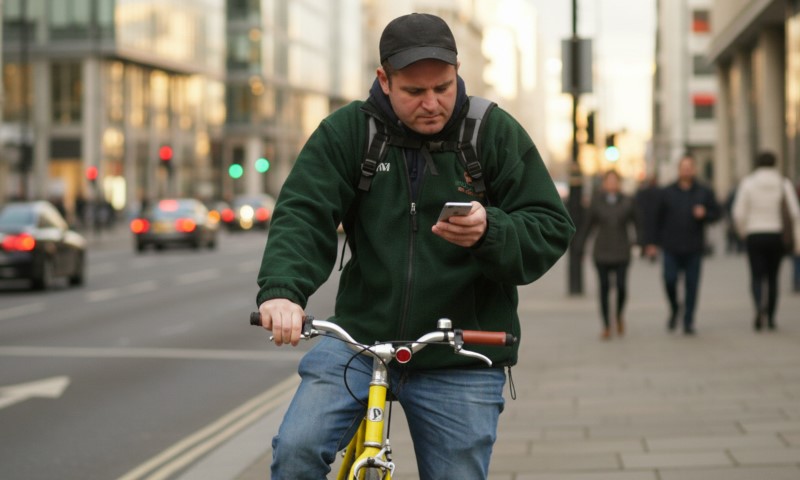
Police officers often confront questions about cell phone use by cyclists and the extent of their authority to issue tickets under distracted driving or related laws.
Phone use while cycling has become common, including texting, checking messages, and using navigation apps.
In many countries, road safety rules prioritize attention and control even when statutes do not specifically mention bicycles in distracted driving provisions.
Most distracted driving laws were written with motor vehicles in mind. Research on traffic safety consistently shows that distraction creates serious risks, contributing to crashes, injuries, and fatalities.
Public health data on distracted driving identifies visual, manual, and cognitive distraction as major safety threats.
Although much of that data focuses on motorists, the danger created by inattention affects all road users, including cyclists.
Police Authority to Issue Tickets to Cyclists

Authority to cite a cyclist for phone use depends primarily on statutory language and how traffic codes define road users.
Clear legislative wording simplifies enforcement. Absence of direct language requires reliance on broader safety provisions.
Where Specific Laws Include Cyclists
Countries and regions that explicitly prohibit cellphone use while cycling grant direct enforcement power to police officers.
Germany and France provide clear examples at the national level. Parts of Canada, such as Ontario, and parts of Australia, such as Queensland and Victoria, also extend device restrictions to cyclists.
In these jurisdictions, officers can issue fines solely for holding or operating a phone while riding.
Proof of weaving, ignoring signals, or causing a crash is not always necessary.
Observed handheld use during bicycle operation may be enough to justify a citation.
Clear statutory structure in these areas typically includes:
- Explicit reference to cyclists or bicycle operators in phone use bans
- Defined monetary penalties, such as approximately 55 euros in Germany or up to 135 euros in France
- Permission for mounted or hands free use only if control remains intact
Legal clarity reduces interpretive disputes. Officers do not need to rely on broad or indirect provisions. Enforcement becomes more consistent because prohibited conduct is clearly identified.
Where Laws Do Not Explicitly Include Cyclists
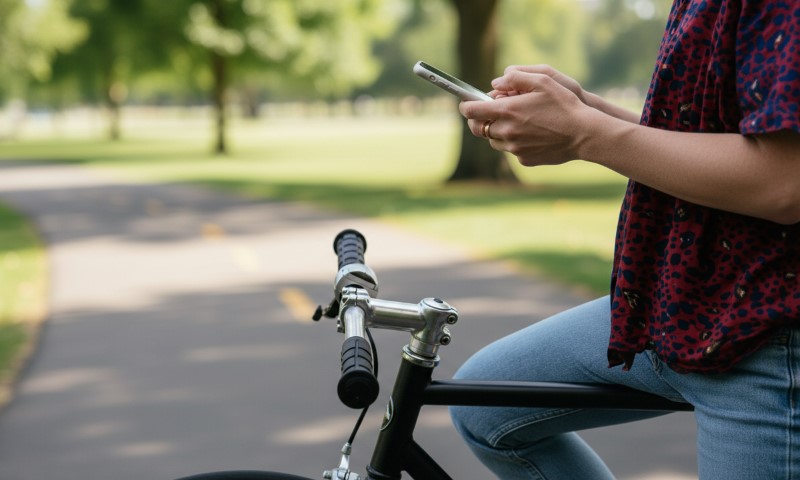
Some jurisdictions restrict distracted driving statutes to motor vehicles.
In those areas, police may not be able to charge a cyclist under a handheld phone ban designed solely for drivers of cars and trucks. Instead, enforcement relies on general road safety offenses.
Careless cycling and dangerous cycling statutes typically prohibit conduct that endangers others or demonstrates a lack of reasonable attention.
Phone use becomes legally significant when it contributes to unsafe riding. Examples of conduct that may support a citation include:
- Swerving into adjacent lanes while looking at a screen
- Failing to obey traffic signals or stop signs due to distraction
- Nearly colliding with pedestrians or vehicles while typing or scrolling
In situations where distraction leads to a crash involving a cyclist or motor vehicle, reviewing a comprehensive car accident checklist for injury claims can help injured parties document evidence, seek medical care promptly, and protect legal rights.
United Kingdom practice offers a clear illustration. Mobile phone use while cycling is not automatically illegal.
Prosecution may occur if riding shows a lack of due care and attention and phone use interferes with control.
Enforcement Emphasis
Traffic enforcement campaigns often prioritize motor vehicles.
Higher speeds and greater mass increase the potential for severe injury and property damage.
Statutory language targeting drivers of cars and trucks is often detailed and specific, making citations more straightforward.
Even so, public messaging consistently warns that distraction endangers all road users. Risk does not disappear at lower cycling speeds.
Police may intervene when a cyclist’s device use creates danger for pedestrians in crosswalks, other cyclists in bike lanes, or motorists sharing the roadway.
Practical enforcement decisions may consider:
- Severity of observed risk
- Density of pedestrian or vehicle traffic
- Degree to which phone use affects steering, braking, or awareness
Use of Phones While Cycling

Growing smartphone use has changed how people travel, including those who ride bicycles.
Riders often rely on navigation apps, music streaming, messaging, or fitness tracking while in motion.
Increased connectivity creates convenience, yet it also introduces safety concerns tied to reduced attention and diminished physical control.
Legal treatment of phone use while cycling differs across jurisdictions, largely based on how lawmakers define vehicles and road users.
United Kingdom
British law does not create a specific offense that automatically bans mobile phone use while cycling.
Highway Code provisions require cyclists to ride with due care and attention and to avoid dangerous or inconsiderate conduct.
Enforcement depends on behavior rather than mere possession of a device.
A cyclist who looks down at a phone and begins to drift across lanes or ignore traffic signals may face prosecution for cycling without due care and attention.
Key aspects of enforcement in the United Kingdom include:
- No automatic ban on holding a phone while riding
- Obligation to maintain proper control at all times
- Potential charges if device use contributes to unsafe riding
Practical effect centers on observable risk. Police focus on conduct that interferes with safe operation instead of phone use alone.
United States
American law varies significantly by state. Many states treat bicycles as vehicles for most traffic law purposes. California applies general vehicle laws to cyclists unless a rule clearly applies only to motor vehicles.
As a result, cyclists must follow traffic signals, right-of-way rules, and other operational requirements similar to motorists.
Texas law prohibits carrying any object that prevents a rider from keeping at least one hand on the handlebars.
Certain states have enacted distracted cycling statutes that specifically address handheld device use. In those states, police authority is clearer because legislation directly mentions cyclists and mobile phones.
Variation across states means riders must review local codes to determine applicable restrictions.
Canada
Provincial law governs cycling conduct in Canada.
Ontario applies distracted driving laws to cyclists, allowing officers to issue citations for handheld device use while riding.
Legal language extends obligations to bicycle operators, placing them within the scope of distraction prohibitions.
British Columbia requires cyclists to comply with road user legislation that includes standards for safe conduct.
Phone use that compromises control, reduces attention, or creates hazards may result in penalties under broader safety provisions.
Australia
Australian states regulate cycling individually. Queensland prohibits holding a mobile phone while cycling. Hands-free use is permitted if the device is secured in a mount and the rider maintains proper control.
Victoria applies similar restrictions, reinforcing a consistent safety message in that region.
Western Australia does not have clear phone-specific provisions directed at cyclists.
General road safety laws still require riders to maintain control and avoid dangerous conduct.
The regulatory framework in Australia often distinguishes between:
- Handheld use, which is prohibited in states such as Queensland and Victoria
- Properly mounted hands-free use, which may be permitted if control remains intact
Germany
German traffic regulations treat cyclists as participants in road traffic who must comply with specific device restrictions. Handheld phone use while cycling is explicitly prohibited under national traffic law.
Fines typically begin at about 55 euros. Higher penalties may apply if phone use contributes to an accident or creates additional hazards.
Legal framework does not require proof that the cyclist swerved, ignored a signal, or endangered another person. Observed handheld use while riding is generally sufficient for a citation.
Enforcement authority is clear because statutory language directly includes cyclists within the scope of the ban. Police officers may stop a rider and issue a fine based on visible phone handling during operation of the bicycle.
France
French traffic law also expressly prohibits mobile phone use while cycling. Statutes place cyclists within the group of road users subject to device restrictions.
A cyclist who holds or operates a mobile phone while riding commits a traffic offense.
Fines can reach up to 135 euros. Amount may vary depending on circumstances and procedural factors.
As in Germany, enforcement does not depend on proof of erratic riding or actual harm. Visible handheld use while the bicycle is in motion can justify a citation.
Hands-free systems are allowed only if the rider remains fully in control of the bicycle.
Control requirement plays a central role in French enforcement.
If a device is mounted and operated without compromising steering, braking, or awareness, liability may not arise.
The Bottom Line
Police authority to issue a smartphone-related ticket to a cyclist depends on local statutory language.
Jurisdictions that explicitly prohibit handheld phone use while cycling allow officers to issue citations directly.
Public safety considerations support treating distraction as a meaningful risk factor for all road users.
Even though legal frameworks vary, maintaining attention and control remains essential for cyclists as well as motorists.